PDF-Bücher Beowulf: A Translation and Commentary, Together with Sellic Spell
PDF-Bücher Beowulf: A Translation and Commentary, Together with Sellic Spell
Die sehr einfache Sprache zu verstehen, um die Auswahl der Worte, und wie der Autor die Bedeutung sowie Lektion dieser Publikation beschreibt schnell stimuliert werden. Es bedeutet, dass jede Art von Menschen aus allen Staaten sowie Grad erkennen könnte genau das, was diese Veröffentlichung wird sicherlich begeistern. Eindrucksvoll und Verständnis sind zwei Arten von Methoden verbunden über ein Buch, um herauszufinden. Wenn diese Beowulf: A Translation And Commentary, Together With Sellic Spell existiert und auch in der breiten Öffentlichkeit angeboten werden, sind viele Menschen versuchen, direkt auf diese Veröffentlichung als ihre eigene Lese Produkt zu erhalten.
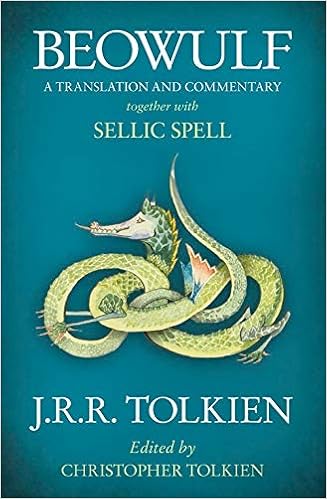
Beowulf: A Translation and Commentary, Together with Sellic Spell

PDF-Bücher Beowulf: A Translation and Commentary, Together with Sellic Spell
Lesen, genau das, was denken Sie, dieses Wort? Ist das Wort zu belasten Sie? Mit vielen Arbeiten, Aufgaben und Aufgaben, sind gezwungen, Sie viel diese spezifische Aktivität zu tun? Nun, auch viele Leute berücksichtigen, dass das Lesen Art uninteressant Aufgabe ist, es bedeutet nicht, dass man es ignorieren müssen. Manchmal werden Sie sicherlich Zeiten erfordern zu verbringen Führer zu lesen. Auch ist es nur ein Buch; es kann ein äußerst würdig und auch wertvoller Punkt zu haben sein.
Yeah, even this is a brand-new coming publication; it will not indicate that we will provide it barely. You recognize in this case, you can acquire guide by clicking the link. The web link will direct you to obtain the soft documents of the book quickly as well as straight. It will really alleviate your way to get DDD even you might not go anywhere. Only remain at home or office as well as obtain easy with your net linking. This is basic, quick, and also relied on.
Currently, you could recognize well that this book is mainly suggested not just for the readers that like this subject. This is also advertised for all people and public type society. It will certainly not limit you to review or not guide. But, when you have started or started to check out DDD, you will certainly know why precisely guide will certainly offer you al favorable points.
When you have reviewed it a lot more pages, you will recognize a growing number of once more. Additionally when you have reviewed all finished. That's your time to constantly remember as well as do exactly what the lesson and experience of this publication provided to you. By this problem, you have to understand that every book ahs various means to present the impression to any kind of viewers. However they will be and also must be. This is just what the DDD constantly offers you lesson about it.
Pressestimmen
"This is long-awaited, and hugely exciting for Tolkien readers" The Guardian "If he had never written The Lord of the Rings he would have been famous in academic circles for writing one published lecture on Beowulf called The Monsters and the Critics. It turned things upside down. Beowulf was probably the medieval text that influenced him the most and the commentary and lectures are `nuggets of gold'" The Independent "A tantalising prospect. Tolkien's translation of Sir Gawain is a master class in linguistic chicanery - Middle English meets Middle Earth... it will be interesting to see if it gives Heaney's Beowulf a run for its money" Simon Armitage, The Guardian
Autorenkommentar
J.R.R. Tolkien is best known for The Hobbit and The Lord of the Rings, selling 150 million copies in more than 60 languages worldwide. He died in 1973 at the age of 81. Christopher Tolkien is the third son of J.R.R. Tolkien. Appointed by J.R.R. Tolkien to be his literary executor, he has devoted himself to the publication of his father’s unpublished writings, notably The Silmarillion and The History of Middle-earth.
Alle Produktbeschreibungen
Produktinformation
Taschenbuch: 444 Seiten
Verlag: HARPER COLLINS (28. Januar 2016)
Sprache: Englisch
ISBN-10: 9780007590094
ISBN-13: 978-0007590094
ASIN: 0007590091
Größe und/oder Gewicht:
13 x 2,8 x 19,7 cm
Durchschnittliche Kundenbewertung:
4.6 von 5 Sternen
3 Kundenrezensionen
Amazon Bestseller-Rang:
Nr. 32.248 in Fremdsprachige Bücher (Siehe Top 100 in Fremdsprachige Bücher)
Tolkien was profoundly influenced and perhaps even infatuated by this Anglo Saxon poem. He is probably the person many students of English literature curse because of the need to study this text in original form and be able to parse segments for their degree. I read this whilst at school and for a long time felt no need to keep a hard copy for myself. Since reading Heaney's excellent translation I have felt the need to retain a copy just to be able to compare and contrast their differing approaches.Heaney can be read as a stirring tale of heroic deeds but Tolkien's approach is more scholarly, I find they work very well together.Kindle edition works well.
There is nothing I can say about this wonderful translation of my favourite great poem. J.R.R.Tolkein remains the master!
Wie alle von Christopher Tolkien edierten Werke seines Vaters hervorragend und kenntnisreich. Die Einführung und die Kommentare überzeugen genau so wie die sprachliche Darstellung. Der gesamte Prozess der Übersetzung wird sehr klar.
Tolkien's translation of Beowulf dropped today, and goodness gracious is it a beautiful thing. Not only the poetic-prose translation itself (in prose form, but with an ear to how long sentences are and to alliteration), but copious footnotes by Christopher Tolkien about the translation and its composition from the existent manuscripts that JRR had left behind; a couple hundred pages of lecture excepts from JRR's famous lecture series on the poem that are just gorgeous in detail and scope; The Sellic Spell, a piece of Beowulf fan-fiction that JRR wrote about the early adventures of Beowulf/attempt to reconstruct the original tale from which Beowulf is a later version of; and The Lay of Beowulf, a shorter version of the story in verse for singing your children to sleep.This is the good stuff. I'm already enjoying it as much as Seamus Heaney's verse translation (read alongside, not instead of: Heaney is more raw and emotional, Tolkien more beautifully complex, both are worth your time), and the commentary is amazing. My only beef is that it doesn't include The Monsters and the Critics, Tolkien's famous lecture about the poem's critics and its place in history, but as its quite long and is easily available both online and in a separate volume, I can over look it.I read something like this, and I wish all writers could be so well served by their heirs. Brian Herbert, I'm looking in your direction...
Had J.R.R. Tolkien never written The Hobbit, The Lord of the Rings, or The Silmarillion his fame today would rest on his long career at Oxford University as professor of Anglo-Saxon. There he did pioneering work in philology, but his greatest renown would come from his life long labor of love: studying the great poem Beowulf. Much of Tolkien's work on Beowulf, especially his revolutionary essay "The Monsters and the Critics," has been widely available for many years. Now Christopher Tolkien, serving as his father's literary executor, has give us another treasure: J.R.R. Tolkien's own prose translation of Beowulf.Christopher Tolkien states in his Preface that the translation was completed by 1926, when his father was 34 and still in the early years of his career. Over the next twenty years Tolkien continued to study and reflect on Beowulf, writing essays and giving lectures and classes. In preparing Tolkien's translation for publication his son had to choose between several different manuscripts and then deal with the truly arduous task of selecting from a vast body of work those notes and commentaries which would be most illuminating. The result is an amazing almost line by line analysis of the translation. As yet I've only had time to dip in here and there, but wherever I've looked I've found some fascinating insights and new information, such as that "Hwaet", the famous first word of Beowulf which Tolkien translated as "Lo!" is an anacrusis or "striking up" that derived from minstrels, or that Beowulf's "ice-bears" could not have been polar bears since that species was not known in Europe until much later.If this edition contained only Tolkien's translation with his son's notes and commentary that alone would make it worthwhile, but it also includes another gem, Tolkien's story "Sellic Spell" in both modern English and Old English. Tolkien recognized that there must have been an original Anglo-Saxon tale that was a source for the poem Beowulf. "Sellic Spell" is an attempt (or attempts, as in his customary fashion Tolkien wrote several versions) to reconstruct that tale. So we have a tale taht begins "Once upon a time . . ." that tells the tale of a foundling child called Beewolf, his adventures with his companions Handshoe and Ashwood, and the monsters Grinder and his dam. It's an intriguing and beautiful tale which I've not yet had time to savor in full, but I already know it's one to which I will return many times. Finally, the book concludes with two poems, or two versions of the same poem "The Lay of Beowulf," which Tolkien noted were intended to be sung. They are short but very vivid, and it isn't surprising that Christopher Tolkien notes that he remembers his father singing one to him when he was a small boy in the early 1930s.While this volume will never have the readership enjoyed by J.R.R. Tolkien's stories of Middle-earth, it makes a wonderful feast for those who,like me, were introduced to Beowulf and other treasures of Old English by him. Nor will those who pick up Beowulf seeking echoes of Middle-earth be disappointed, for there is much here to remind them of its denizens.
I bought this book more as an act of solidarity than with any great hopes, and it's a good thing. It is a true hippogriff, as Christopher Tolkien points out rather shamefacedly in the preface. It is not an alternative to any of the other presentations of Beowulf. For the determined student of Beowulf and Old English, Klaeber remains necessary; in fact Tolkien's book requires a Klaeber on hand for its own use. It makes no pretence of competing with Heaney, which will probably remain the standard for translations, accessible to the layman and valuable for the serious student. It can't really compete with the Burton Raffel translation, which for all its limitations remains the best compact and readable approach to Beowulf, nor with the NCE now that Heaney is included as the translation.Tolkien's translation is serviceable though reading it, you wish that Tolkien had prepared it for publication himself and made some of the decisions that Christopher was left to worry over. The commentary is interesting as far as it goes, but because only the Grendel portion of Beowulf was required reading at Oxford, Tolkien's lecture notes are painfully truncated. Another lack that only Tolkien himself could have remedied. Also unfortunately, Tolkien's commentary is on the original text, not his translation, so to follow it you must have at least the original Old English (not provided) and at best both the original and a line-for-line translation (which Tolkien's translation could be formatted to provide, but isn't).So, what good is it? Well, it holds an interesting mirror to LotR, expecially the treatment of the Rohirrim. It's no surprise that Rohan was modelled on Anglo-Saxon England, but the details of that modelling are enjoyable reading. I'm re-reading LotR concurrently with the Beowulf and commentary, and it's fascinating. That, really, is as Christopher says a bit obliquely, the only indispensible task it serves. For those of us with more than a passing interest in Tolkien, it's another huge and entertaining text to add to our word hoard; and the three-page note on "whale road" is classic Tolkien, in which he finally, after paragraphs of learned objection, admits that the real reason he hates the word (which he says should be translated "dolphin road" -- although it's clear from his own evidence that the mammal in question is really the Orca or "Killer Whale" -- which is technically a species of dolphin, but not what most of us think of when using the term) is that it sounds like an infantile pronunciation of the abominable "railroad."This is not as essential a book as The Fall of Arthur, The Children of Hurin, or The Legend of Sigurd and Gudrun, but it is a welcome addition to a shelf of fascinating literature from a unique scholar and writer. Now if only someone will collect Tolkien's Kullervo with a perceptive discussion of his use of Finnish and Finland.... [N.B.: Verlyn Fleiger has in fact edited Tolkien's "Finnish materials," including his version of "Kullervo," in Tolkien Studies Vol 7.]
Beowulf: A Translation and Commentary, Together with Sellic Spell PDF
Beowulf: A Translation and Commentary, Together with Sellic Spell EPub
Beowulf: A Translation and Commentary, Together with Sellic Spell Doc
Beowulf: A Translation and Commentary, Together with Sellic Spell iBooks
Beowulf: A Translation and Commentary, Together with Sellic Spell rtf
Beowulf: A Translation and Commentary, Together with Sellic Spell Mobipocket
Beowulf: A Translation and Commentary, Together with Sellic Spell Kindle
0 komentar